


Composite Decking in Singapore: Costs, Care and Is It Worth It?
Composite Decking in Singapore: Costs, Care and Is It Worth It?
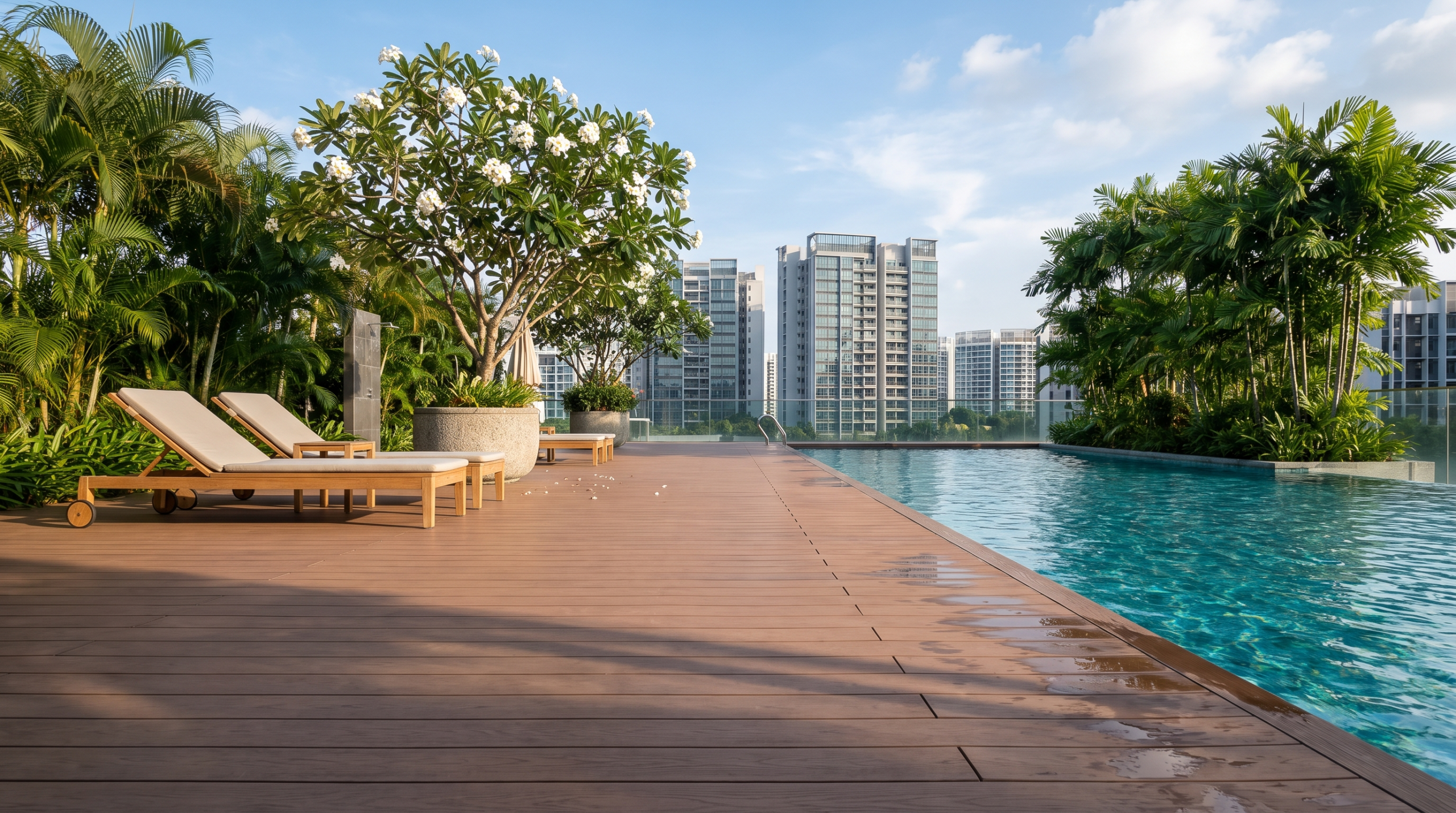
Choosing between composite and timber decking often comes down to how much maintenance you’re willing to take on. Timber can fade, weather and develop splinters over time, while composite decking generally requires less upkeep. However, composite has its own drawbacks, including heat build-up in direct sunlight and a different look and feel from natural wood.
It also helps to know that composite decking in Singapore is not one product. An uncapped board and a capped, co-extruded board behave differently and cost differently. This guide weighs the material fairly on the three things that actually decide it: cost, care and how it feels to use.
Wood & Wood supplies and installs both natural timber and composite, so we have no reason to oversell either. Over more than 30 years, that has included timber decks of every size and composite decks for corporate campuses. The sections below cover what composite is, what it costs, what care it needs, how it compares with timber, and where it makes the most sense.
What exactly is composite decking?
Composite decking is made from wood fibre and recycled plastic pressed into boards; the better grades add a bonded polymer cap (a co-extruded layer) for stain and fade resistance.
Unlike natural timber, composite boards are manufactured with a consistent colour and pattern. This gives the deck a more uniform appearance, although it won’t have the natural grain and variation of real wood.
- Wood-plastic composite (WPC): a blend of wood fibre and polymer, with UV stabilisers and colour pigment.
- Uncapped versus capped: a capped, co-extruded board resists stains, scratches and fading far better than an uncapped one; expect a slight settling of tone in the first months, then stability.
- Recycled content: most composite uses recycled plastic and wood waste, which is part of its appeal.
- Fixed colour and pattern: uniform across the deck, with none of the board-to-board variation of real timber.
- Solid or hollow profile: solid-core boards feel firmer underfoot and take fixings better; hollow boards are lighter and cheaper but can sound hollow and trap water if cut ends are left open.
How much does composite decking cost in Singapore?
Composite decking can cost more upfront than some timber options, but the total price depends on board quality, the timber species you are comparing it with and installation requirements. Over time, composite may also save you money on maintenance because it doesn’t need regular oiling, sanding or staining.
When comparing quotes, look beyond the price of the boards. Both composite and timber decking need a supporting frame underneath, along with installation. Ask for a breakdown of the materials, supporting frame and labour so you can compare the full cost of each option.
- Composite decking cost varies by grade: capped, co-extruded boards cost well above uncapped ones, and they are the grade worth specifying.
- Watch for a composite board-only price set against a timber figure that already includes the frame; it makes composite look cheaper than it really is.
- Compare costs over 10 to 15 years, including the oiling, sanding and board replacement that composite avoids.
- Compare the warranty too: capped composite often carries a long fade-and-stain warranty, and that cover is part of what the higher board price buys.
- When you compare quotes, check that each figure is GST-inclusive: IRAS requires GST-registered businesses to display and quote prices inclusive of goods and services tax (GST), written quotes included, so a figure shown before GST is not the number you will pay.
How much maintenance does composite decking need?
Far less than timber, but not nothing: it still needs washing, working drainage and realistic expectations about heat and scratches.
The low-maintenance claim is largely true, and it is composite’s real advantage. What the pitch leaves out is that low is not zero.
- Wash periodically to clear mould and algae, which grow on any surface in the tropics.
- No oiling, staining or sanding is required, unlike timber.
- Drainage and ventilation under the deck still matter; trapped water is a problem for any decking.
- Keep the gaps between boards clear of leaf litter and grit, and avoid close-range pressure washing on uncapped boards, which can roughen the surface.
- Composite heats up more than timber in direct sun, so for barefoot areas such as pool surrounds choose a lighter board colour, which runs cooler, and give it shade where you can; a deep scratch on an uncapped board also cannot be sanded out.
Composite vs timber decking: which should you choose?
Choose composite if low upkeep and colour stability matter most; choose natural timber if the look and feel of real wood matter and someone will maintain it.
This is the heart of composite vs timber decking. We cover the natural-timber side in full, from species to substructure, in our guide to outdoor timber decking in Singapore, and compare chengal, balau and the other hardwoods in our guide to the best wood for outdoor decking.
- Composite: low maintenance, stable colour, termite-proof and uniform, but hotter underfoot and not sandable back to new.
- Timber: real grain, cooler underfoot and refinishable, but it needs upkeep and will grey without oil.
- On sustainability, neither side wins outright: composite uses recycled content and eases demand on tropical hardwood, but it is a plastic composite and is not biodegradable. On the timber side, FSC-certified options are available where a project calls for certified sourcing.
- The honest line, and the one we give clients: composite will not look or feel like timber. That is the trade you are making.
Where does composite make the most sense?
Composite decking in Singapore pays off in hard-to-maintain, wet or high-traffic areas: pool surrounds, condominium balconies, rooftop terraces and commercial spaces where upkeep access is limited.
The best case for composite is rarely aesthetic; it is operational. Where nobody will reliably oil a timber deck, composite is the material that still looks intentional in year five.
- Pool and wet areas, where constant water would punish an unmaintained timber deck.
- Balconies above occupied space, and strata or commercial decks where maintenance is contracted out. Our guide to balcony decking in Singapore covers the drainage and waterproofing side.
- Rooftops and podiums, where the deck sits over a waterproofing membrane and lifting timber boards for periodic maintenance would put that membrane at risk.
- Large campus and institutional decks, such as the outdoor composite deck we supplied for a corporate campus (you can see more in our project references).
Both composite and natural timber options are in our outdoor decks range, supplied with the substructure and installation.
Send us the deck details
The right decking choice depends on more than appearance alone. Natural timber brings distinctive grain patterns, a warm finish and the option to sand and refinish the surface over time. It does, however, need regular maintenance to protect its appearance. Composite decking offers a more consistent finish and generally requires less upkeep, making it worth considering for spaces where regular maintenance may be difficult. The trade-off is that composite can heat up in direct sunlight and won’t have the natural variation of real wood.
Wood & Wood supplies and installs both composite and natural timber decking, so we can help you compare the options based on your budget, preferred finish, site conditions and maintenance needs. Get in touch with the size of your deck, whether it’s a poolside area, balcony or open terrace, who will maintain it and any specific requirements. We’ll provide a recommendation with indicative costs for both options within one working day.