


Ask us for the best wood for outdoor decking and you will get a question back before you get a species: where is the deck, and what should it look like in three years? Outdoors, every species negotiates with the same sun and the same rain, which makes each one negotiate differently. Durability, density, movement, colour, how the surface weathers and how much upkeep the owner will give it all pull on the decision and a deck succeeds on how well the species fits the site it was chosen for.
Why the species question is sharper outdoors
Indoors, choosing timber is mostly a matter of appearance and wear. Outdoors, wood decking is also a matter of survival: frequent rain, hard sun and the constant swing between soaked and dry sort species out quickly and the ones that thrive here have density and natural durability doing work that a finish does indoors. The species is still only half the outcome. Substructure, drainage, ventilation and fixing carry the other half, and we have set that side out in our article on specifying outdoor timber decking. This piece is about the boards themselves.
Chengal decking
Chengal proved itself outdoors in this region long before anyone called it a decking species; it is the timber of boats, bridges and heavy construction across the peninsula. It is dense, naturally durable and fine-grained, with a tight, even surface that machines cleanly and reads more refined underfoot than most tropical hardwoods. Freshly laid it sits in the yellow-brown range and deepens with age; left to weather it silvers evenly, and the fine grain keeps a silvered deck looking intentional rather than tired. The constraints are on the supply side: chengal is the more rare one of the two workhorses, the standing tree now rare enough that NParks lists it as presumed extinct in Singapore’s wild, as well as long lengths in generous sections should be confirmed early rather than assumed. When a project wants the most self-sufficient hardwood the region offers, chengal is usually the species under discussion.
Balau decking
Balau does most of Singapore’s wood decking duty. A heavy hardwood with a naturally durable heartwood, it shares chengal’s density and much of its outdoor toughness, and it is easier to source and easier on the budget, which is why it turns up on everything from condominium pool decks to boardwalks. The differences sit in the detail: balau’s grain is coarser and its colour range wider, so boards vary more across a deck and under full sun it is more given to fine surface checking than chengal. None of that is disqualifying. It means balau rewards a kept oiling schedule and a client who has been shown how the deck will age. Specified on those terms, it is the sensible answer for most large outdoor areas.
The rest of the range
Most wood decking in Singapore comes down to a short list of heavy hardwoods, and the list does not end at two. Ironwood sits at the extreme of density: dark, immensely heavy, hard enough that every fixing wants pre-drilling, and suited to work where mass and wear resistance lead the brief. Burmese teak brings the opposite temperament: naturally oily, dimensionally calmer than chengal or balau, warmer in colour and softer underfoot, at a price that reflects its name. All four sit in our outdoor decking range alongside Resysta, a composite for projects that trade timber’s grain and aging for lower upkeep; we have compared the two materials separately, so this piece stays with the hardwoods.
Appearance, movement and the board itself
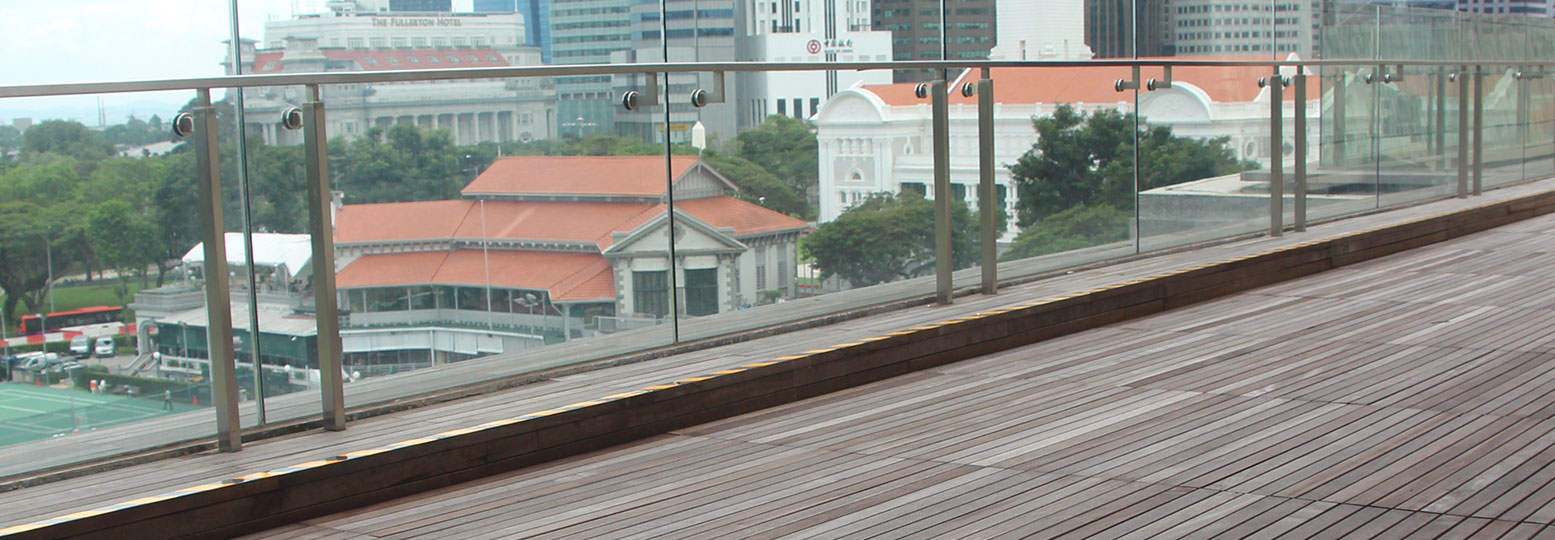
Two things change after handover: colour and dimension. Every uncoated hardwood outdoors loses its installed colour to the sun, chengal and balau towards silver-grey, teak towards a soft grey-gold, and the honest way to present a scheme is to show the client both endpoints and design for the one they will live with. Oiling holds colour at the cost of a schedule; letting the deck silver costs nothing and suits some architecture better. Dimension is the quieter change: boards take on moisture in wet weeks and give it back in dry ones, and the dense species move firmly enough that in timber decking the gap, the fixing and the board width are sized together. Wider boards turn the same movement into more millimetres at every joint, and thicker boards hold flatter through the cycles, so thickness, width, profile and length belong in the specification next to the species name.
What the species cannot do
No species outruns poor detailing. A deck drains, breathes and moves on whatever structure it is given, and money spent on the board is wasted if what sits under it stays wet; the specification article above covers what that structure owes the boards. Maintenance completes the picture: every natural deck needs cleaning, and oiling whenever holding colour is part of the design intent, on a rhythm set by exposure. Between the species in this article the difference is how much work the timber does for you between visits, and all four do more of it than most of what gets laid outdoors.
Choosing between them
There is no single best timber for outdoor decking, and a supplier who names one before asking about your site is selling stock rather than advice. There is a best match, and it falls out of a short list of questions:
- How exposed is the deck, and to what?
- How should it look at handover and five years on?
- What maintenance will its owner keep to?
- What board section does the design call for?
- What does the budget allow across the area?
- What can be supplied in the lengths and quantities the programme needs?
- Who stands behind the supply?
We hold competing species side by side and install what we sell, so we have no reason to argue that one of them answers every deck. Tell us where your deck is going, how it will be exposed, and how you want it to age. We can help you narrow down the options and arrange samples of the two or three species you are considering, so you can compare them in person. If you’re planning hardwood decking in Singapore, get in touch with our team to discuss your project and request samples.