


Put a wood-look porcelain tile and an engineered oak board side by side, and from a distance the difference can be surprisingly subtle. Most searches for wooden floor tiles are looking for the first one, a ceramic or porcelain tile printed to resemble timber, and it is worth saying plainly that we make and supply the second, in solid and engineered timber and no tiles at all.
The two can point a room in the same visual direction. They are different materials, they behave differently, and they should be specified for different reasons.
What the surface is made of
A wood-effect tile carries a printed timber image on a fired ceramic or porcelain body, sealed under a glaze or a through-body texture. The visual is designed, then repeated: a collection ships with a fixed number of print faces, and how convincing the floor looks at room scale depends on how many faces there are, how large the tile is, and how carefully the layout is randomised so that the same knot does not resurface every third row.
Real timber varies for a different reason:every board is a different slice of a different tree, and the variation designers chase, or want to calm down, is managed through grade and batch selection instead of a print run. Then there are the joints. Tiles are laid with grout lines, which introduce a grid the timber floor does not have: a narrow joint in a matched grout colour reads quietly, a wide or contrasting one turns the floor into a pattern of rectangles, and either way the rhythm differs from boards meeting edge to edge. Neither is the better-looking floor by any objective measure; they are simply different drawings.
Feel, sound and how a room reads
The visual difference can become less obvious from a distance, but the difference in feel is immediate. A glazed tile is hard and uniform under a bare foot; timber has grain you can feel and a slight give that reads as warmth, which is a large part of why designers reach for it for living spaces where people spend more time barefoot.
Sound follows the same split: footfall and dropped objects tend to ring on tile and land softer on timber, something people notice without being able to name. These are experiences rather than measurements, and they belong in the design conversation as such.
Moisture and where each floor belongs
The lazy version of this comparison says tile is waterproof and wood is not, and it is lazy because neither half is a specification. A tiled floor is only as dry as its grout, its falls and the waterproofing beneath it, and a timber floor’s suitability turns on the space, the substrate, the exposure, the product, the installation system and the maintenance it will get.
Wet areas are their own conversation: bathrooms, pool surrounds and open terraces are specified in tile or in outdoor timber detailed for that exposure, and interior real wood flooring is not put forward for them.
Inside the line of the air conditioning, in living areas, bedrooms and hospitality interiors, real timber is working in the conditions it was chosen for. Where a project carries hard cleaning regimes, standing water or a tile-based logic through the whole scheme, wood-effect tiles are a legitimate answer, and we would say so.
Maintenance, repair and the long view
Both floors need cleaning; but their maintenance looks different over time. Tile asks for grout care and, when a tile chips, a replacement that still has to match a batch that may be out of production.
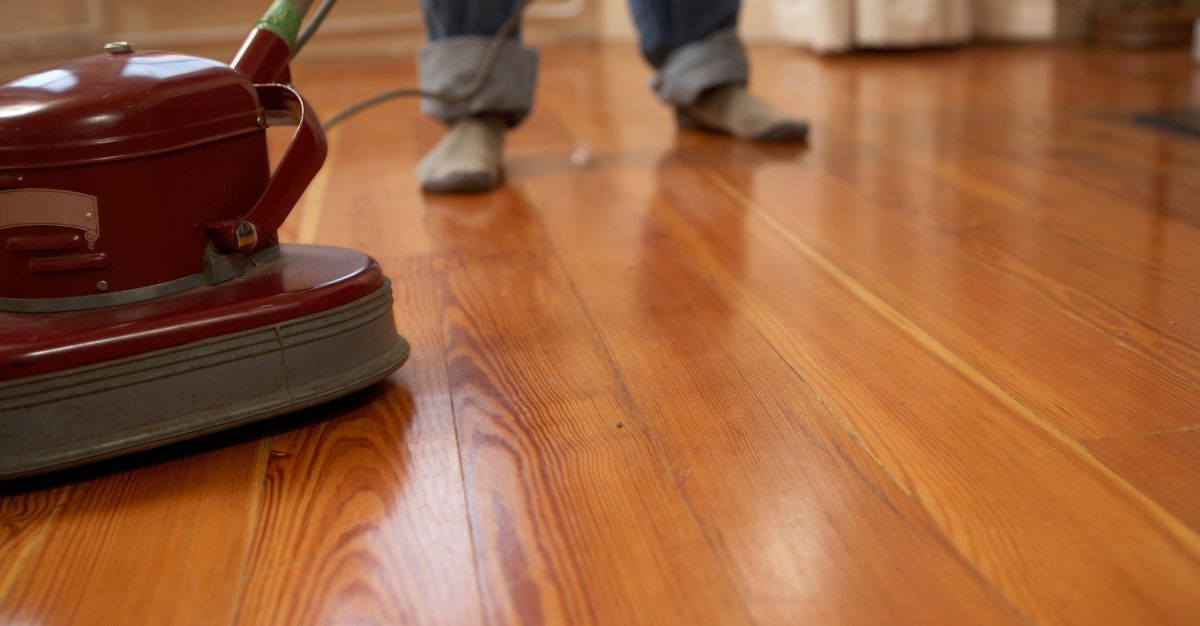
Timber shows its use as fine scratches and a slow shift in colour, and it has a repair route tile lacks: depending on the construction, the thickness of the wear surface, the finish and the floor’s condition, a timber floor can be recoated, or sanded and refinished, so a ten-year-old floor can be brought back rather than replaced.
That is a possibility, never a promise, and it depends on the floor being specified with it in mind. It is also why a timber floor tends to age into the building while a tiled floor stays the floor it was on day one.
Installation and build-up
Both start with the substrate. Good tiling practice puts the preparatory work, a sound and level screed, ahead of everything else, and so does good timber flooring practice; above the screed the two part ways. The tile is bedded in adhesive and grouted, with movement joints at intervals across larger areas. Timber is glued down, secret-nailed or floated depending on its construction, and needs an expansion allowance around its perimeter. Build-up differs too, and build-up decides how the floor meets doors, stairs and adjacent finishes, so the material is settled before anyone draws the thresholds.
Solid, engineered and design continuity
Timber comes in two constructions, solid boards and engineered boards with a genuine timber surface over an engineered core, and which one suits a project is a decision to make after choosing timber rather than a reason for choosing it.
What the construction does not change is continuity. A timber floor can carry the same species across stair treads, wall panelling, joinery and screens, and because we supply fixtures and cladding alongside flooring, that continuity can be specified from one source. A tiled floor can sit well under timber joinery; there will always be a change of material at the junction, and junctions draw the eye.
Wooden floor tiles or timber: choosing for the right reasons
Wood-effect tiles make sense where the project wants a tile-based surface, a robust cleaning regime, a wet-area logic, or conditions that make real timber the wrong call, and there is nothing second-best about specifying them for those reasons.
Real timber makes sense where genuine grain, natural variation, warmth underfoot, ageing character, repairability and material continuity are part of the design intent, because those are the qualities a printed surface can approach and cannot reproduce exactly.
Either way, the specification should name the material and its construction, the surface or print range, board or tile dimensions, joint or gap treatment, the finish, the substrate and installation system, the maintenance regime, the areas covered and the areas excluded, and the sample that was signed off; our hardwood flooring article takes the timber half of that list further.
As a timber flooring specialist, our role is to be clear about where timber belongs and where it does not. If the question on your desk is wooden floor tiles or the real thing, bring the drawings and the room’s demands, and ask for timber samples to set beside the tile: a metre away they look alike, and in the hand they answer the question. The timber flooring collection is where the timber side of that comparison starts.