


Timber Flooring for Commercial and Retail Spaces in Singapore
Timber Flooring for Commercial and Retail Spaces in Singapore
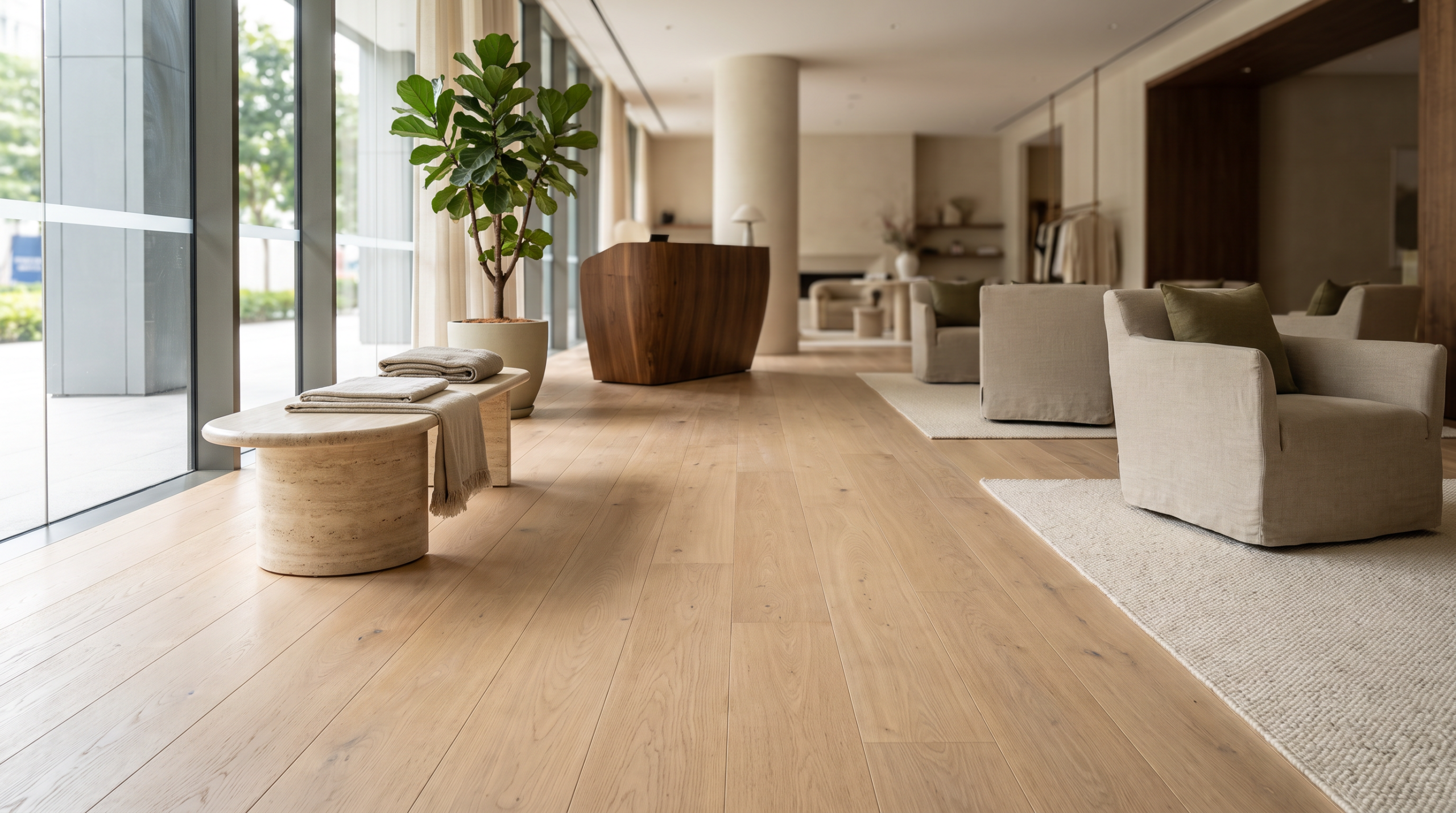
A retail, hospitality or workplace floor takes a workload a home floor never sees, and it has to look composed while doing it. The trouble starts when a commercial floor is specified from a residential template: the right species, the wrong expectation of how it wears, and a programme that treats the floor as decoration rather than a performance item on a critical path.
The phrase timber flooring in Singapore covers solid boards, engineered boards and several grades of each, and procurement teams add their own layer of questions about certification and documentation. This guide stays on what changes when the floor is commercial: the wear, the fit-out programme, the paperwork and the maintenance an operator will realistically keep.
Wood & Wood has supplied timber flooring in Singapore for more than 30 years, and our commercial timber flooring work ranges from a white oak engineered floor across a commercial manufacturing facility to engineered timber in a 340-room hotel, a 225-room hotel, and 255 serviced apartments. The sections below cover the commercial-versus-residential difference, the construction choice, species and finish under traffic, procurement certification, and keeping the floor on programme.
What makes a commercial timber floor different from residential flooring?
Footfall, rolling loads, a commercial cleaning regime and a fixed handover date; the floor is a performance item on a programme, not a finish chosen for looks alone.
Every one of those factors shortens the margin for error. A floor that would last decades in a living room can look tired in a cafe within two years if the species, finish and maintenance were chosen for the wrong workload. It is one of the most common reasons wood flooring in Singapore underperforms in commercial spaces.
- Traffic volume: a retail or food and beverage (F&B) floor sees in a week what a home floor sees in months.
- Rolling loads: trolleys, service equipment and furniture on castors mark a soft species quickly.
- Cleaning: commercial chemicals and wet cleaning will strip the wrong finish.
- Entrance zones: grit carried in on footwear is the fastest way to wear a commercial floor, so specify walk-off matting at every external door and treat the first few metres inside as a sacrificial zone.
- Programme and lease: fixed handover dates, trade sequencing and end-of-lease reinstatement all shape the specification.
Solid or engineered for a commercial fit-out?
Engineered timber flooring is the default for most commercial floors laid over screed, for its stability and installation speed; solid timber flooring still belongs in heritage and signature spaces.
We have already set out the full construction comparison, so this piece will not repeat it. If you are weighing the two in detail, read our guide to engineered timber versus solid wood floors; the commercial shorthand is below.
- Engineered: dimensionally stable, lays over most screeds, faster to install, and the usual choice for large commercial areas.
- Solid: the premium, refinishable option for heritage interiors and signature spaces such as hotel lobbies and flagship retail.
- The refinishing budget is set by construction, so decide it against how often the space will realistically be closed for recoating.
- Factor lease-end reinstatement in early: a bonded floor and a floating one come up very differently, and that can change the construction you choose.
Which species and finish survive retail and F&B traffic?
A harder-wearing species and a repairable finish, because a commercial floor gets refinished zone by zone during its life, not stripped back all at once.
Commercial timber flooring wears in traffic lanes rather than evenly, so the aim is a floor that takes a local repair without a visible patch. Species, finish and even grain patterns all feed into that.
- Timber species: choose by durability class and hardness for the traffic, not by colour or appearance alone. This applies to engineered and solid timber flooring alike.
- Finish: a hard-wax oil spot-repairs zone by zone; a lacquer is harder but needs a full-area recoat when it wears through.
- Appearance: a matt, brushed, or more varied grain hides wear and traffic lanes far better than a flat, glossy, uniform floor.
- Spills and stains: in a food and beverage setting, the finish plays an important role in protecting the timber. Choose a suitable sealed finish and establish a cleaning routine that staff can follow consistently.
Certifications double as a procurement trust signal
On a project chasing green-building credit, low-emission and responsibly sourced materials earn points, and procurement teams want the paper trail before they approve a floor.
For timber flooring in Singapore, the paperwork matters as much as the credential itself. Getting the documentation lined up early keeps the floor off the critical path at submission time.
- Green Mark schemes reward it: BCA’s Green Mark for Retail, for one, awards fit-out points for certified sustainable products, low volatile organic compound (VOC) paints and adhesives, and recycled content.
- Engineered timber can carry Singapore Green Building Product certification, which is relevant for Green Mark submissions. FSC-certified options are available where chain-of-custody documentation is required.
- Ask your timber flooring supplier in Singapore for the certification paperwork at the specification stage, not at handover.
Keeping the floor on programme means sequencing it late
Install the floor towards the end of the project and protect it properly. Timber flooring is one of the last finishes to go in, but it can still be damaged during the final weeks before handover.
Most commercial timber flooring defects at handover are protection failures, not material ones. The floor was fine; it was walked on, loaded or spilt on before it was ready.
- Lay after the wet trades and overhead works are finished.
- Protect the floor immediately after laying, and keep that protection on through the remaining trades.
- For a live retail refurbishment, plan any refinishing access around trading hours.
- Hand over a written maintenance schedule to the operator at completion, naming the cleaning products and the recoat interval; most early wear traces back to a cleaning contractor using the wrong routine.
- For a phased or multi-site rollout, lock in the species, grade, and finish, and reserve matched stock up front so later phases aren’t drawn from whatever is available at the time.
- Agree on a defects inspection with the operator a few weeks after opening, once the floor has seen real traffic, rather than signing it off on handover day.
Our engineered timber flooring range is built for exactly this: manufactured for commercial stability and supplied with installation.
Send us the space and the programme.
Whether you’re fitting out a retail space, a restaurant, an office or a hospitality venue, choosing the right wood flooring in Singapore involves more than finding a finish you like. The floor needs to suit foot traffic levels, the demands of daily ooperationsand the project timeline.
Share your floor area, expected daily footfall, and target handover date, along with any design references or budget considerations. If you’re doing a phased installation or working across multiple locations, let us know so we can factor that into our recommendations.
At Wood & Wood, we’ll help you assess suitable timber species and flooring construction, recommend finishes that suit the space, and plan the installation around your project schedule. We’ll also share examples of similar-scale projects to help you understand how different timber flooring options work in practice.
Get in touch with your project details, and we’ll respond within one working day with recommendations tailored to your space, programme and budget.