


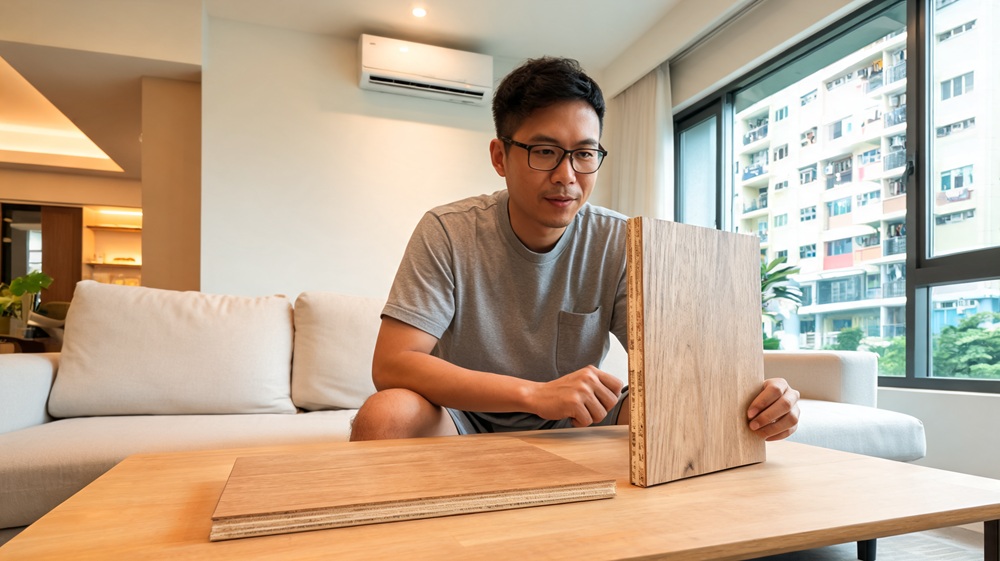
Two engineered oak samples on a table look close to identical, even when you are comparing engineered wood flooring in Singapore. Same species on top, same brushed and oiled surface, near enough in colour that the conversation moves on to undertone. From above, there is not a lot that can tell them apart. Turn the samples on edge and they stop being the same product. The section shows the thickness of the wear layer, the core it is bonded to and the glue lines holding the two together, and those three things decide how each floor performs five years down the line.
That is where the specification effort belongs. If the project is still weighing solid timber against engineered, that comparison is covered in an earlier piece. For most conditioned Singapore interiors the category decision comes quickly. The harder question, and the one that separates a floor from a callback, is which engineered board, on which subfloor, under which conditions. The spread of quality inside the category is wider than the gap between the categories, and none of it is visible from above.
Real timber where it shows
An engineered wood flooring is genuine timber where it can be seen and touched. A wear layer of oak or walnut, thick enough to sand, sits bonded to a core built up in layers that run in alternating directions. Timber moves as moisture moves in and out of it. The cross-layered core restrains that movement and spreads it evenly through the board, which is why an engineered floor holds its dimensions in conditions that would open gaps in a solid one.
Singapore interiors work that construction hard. Rooms run air-conditioned through the day and return to warm, humid air at night. A west-facing condo living room, a landed house that opens to the garden, a hotel corridor and an office with round-the-clock cooling are four different environments for the same board. The board never stops exchanging moisture with the room around it. A well-made one does its moving in fractions of a millimetre.
The wear layer and the core
Start with the wear layer, because it sets the floor’s lifespan. BCA Academy’s industry-practice material on timber flooring puts typical wear layers at 3 to 4mm within a range of 2 to 8mm, and treats roughly 2.5mm as the working minimum for a floor that will be refinished rather than replaced. Ask for the figure in writing, because a 0.6mm veneer and a 4mm one photograph identically as oak.
The core decides whether the board stays flat while the wear layer does its job. Our own engineered boards carry a 3 to 5mm veneer bonded to a 100 per cent birch core, are manufactured in-house, and come with a 15-year structural warranty. Whoever you buy from, ask how colour and grade are sorted between production runs. Board 400 has to sit next to board 4 without announcing itself, and that consistency comes from manufacturing control rather than anything a single sample can show. The finish is part of the same control: lacquer or oil applied in the factory arrives consistent across the batch, and the choice between them sets the floor’s maintenance routine.
The rules already written for this market
If the project is an HDB flat, HDB’s renovation guidelines for building works govern the laying and replacement of floor finishes. They are straightforward to check before preparing a quotation. Regardless of the flat’s age, the combined thickness of the board, adhesive, underlay and any plywood base can raise the finished floor level. This can affect thresholds and door clearances, which are often the first places where the change becomes noticeable.
Whatever the building, the screed carries the floor. BCA’s Good Industry Practices guidebook on timber flooring works to a screed levelness within plus or minus 3mm per 2m length, air-curing of at least 14 days, and a moisture meter check on the screed before laying begins. Engineered boards can tolerate more variations than solid timber , but a wet screed can still cause problems. Put the tolerance and the moisture reading in the package.
The standard the floor is judged against
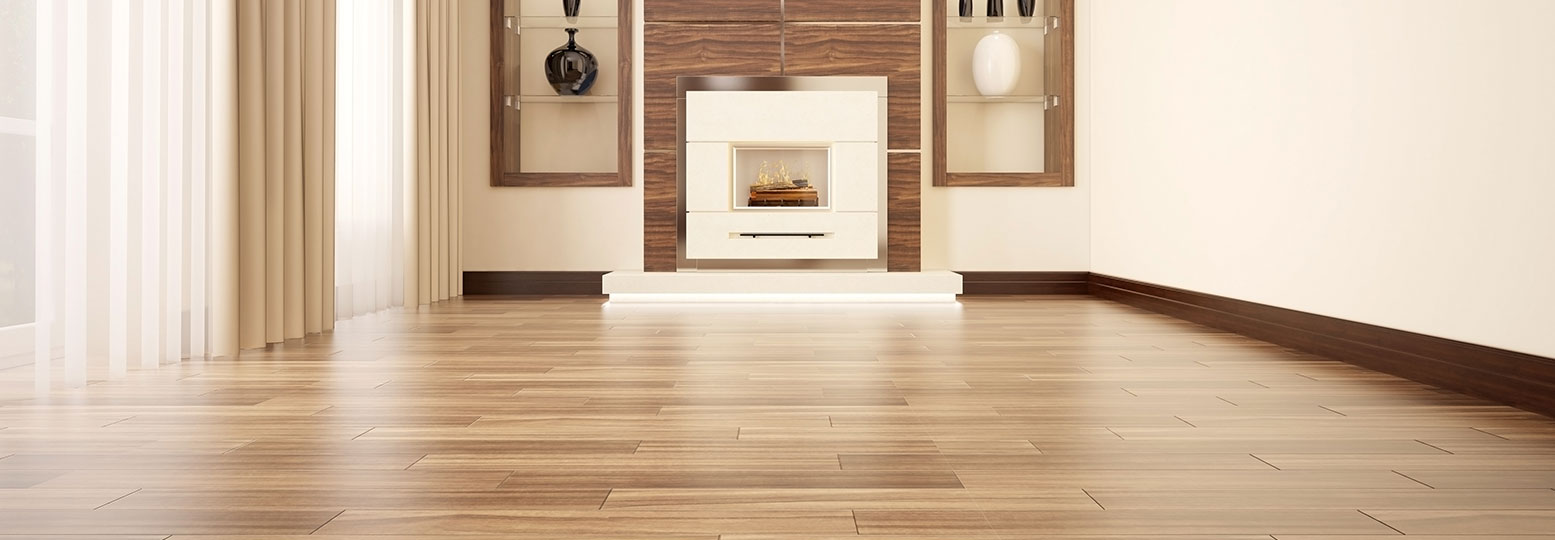
Since 1989, BCA has assessed workmanship on new buildings under CONQUAS, and the same authority’s guidebook carries a final inspection checklist for timber floors: no visible gaps between strips, edges properly sealed, the surface even to within 3mm over 1.2m, no cracks or visible damage. If you are signing off a floor at handover, that checklist is the walk-through. Sight along the boards against the light, listen for hollow spots underfoot, and check the sealing at the perimeter where the trades met. The developer’s assessor will be doing the same.
Green Mark and the certificate
Where a project is chasing Green Mark points, product certification does the arithmetic. The Singapore Green Building Product scheme rates products from 1 to 4 ticks, and the higher the rating, the more points the product contributes under Green Mark. The engineered wood models listed on our SGBP certificate hold the scheme’s top rating, Leader 4-Tick. If the brief turns on sourcing rather than green-building points, FSC-certified options are available.
Getting it onto the site
For projects using engineered wood flooring in Singapore, the floor goes down, floated on underlay, glued directly to screed, or fixed to a plywood base. belongs in the specification because it changes the build-up height and how the floor feels underfoot. The boards need time on site before laying, an expansion allowance at the edges of the room, and a slot in the programme after the wet trades have finished.
None of this limits the design. The same construction carries wide planks, herringbone and chevron, in series running from white oak to walnut and beech, and the range shows in the published project record: oak engineered flooring through The Reserve Residences, white oak across the Dyson Battery Plant.
If the finishes schedule is being written now, the useful questions are settled quickly: species and finish, wear layer in millimetres, core material, fixing method, screed tolerance and moisture reading, warranty terms, certificate numbers where Green Mark is in play. The Engineered Timber Collection is the place to start looking, and our timber specialists will talk a project through at whatever stage it has reached.
Samples are there to be taken away and argued over. The tops will all look good. Ask to see them on edge.