


Parquet Flooring in Singapore: Styles, Costs and Buying Tips
Parquet Flooring in Singapore: Styles, Costs and Buying Tips
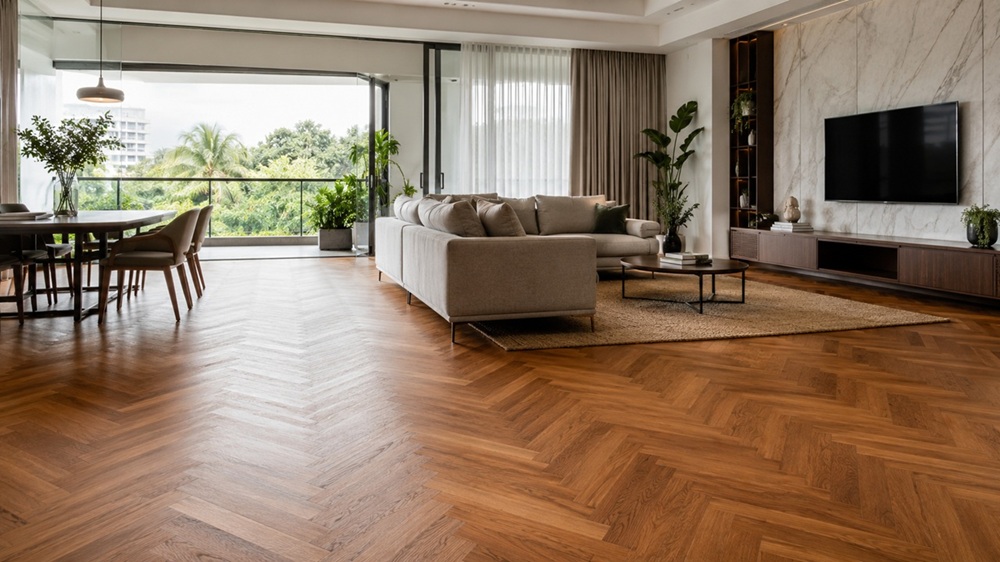
If you have started looking into parquet flooring in Singapore, you have likely encountered the same confusion many homeowners do: every showroom uses that word differently. One calls a herringbone floor “parquet,” another calls the same thing “wood tiles,” and a third quotes you “engineered flooring” while showing you a parquet pattern anyway.
It is hard to tell whether these are three different products or the same product wearing three different names.
In brief, parquet is not a type of wood. It is a way of laying wood, using short blocks or strips arranged into a repeating geometric pattern rather than long straight planks. That single distinction changes the look, the price and the installation time.
This guide separates the pattern from the material, walks you through the styles and realistic costs in Singapore, and gives you the questions to ask before you commit.
We speak from direct experience, because we mill it ourselves. Wood & Wood has spent more than 30 years as a timber manufacturer, retailer and installer, milling and finishing parquet blocks in our own workshop rather than reselling someone else’s stock. That means the person quoting you is also the person who made the floor. It also means we know each board intimately: the warmth of the grain underfoot, the way light moves across a hand-laid herringbone, and how a well-finished oil brings out the depth of teak or walnut.
The rest of this article covers what parquet actually is, the patterns you will be shown here, the solid-versus-engineered decision, what it costs per square foot, what the project timeline really looks like stage by stage, and how to keep the floor stable in Singapore’s humidity.
What parquet flooring actually mean
Parquet flooring is timber cut into short blocks or strips and laid in a repeating geometric pattern, rather than as long single-direction planks.
The word describes the arrangement, not the species. The same oak, teak or walnut can be sold as long planks or as parquet blocks; what makes it parquet is the geometry on the floor. It is the look you see in colonial shophouses, heritage bungalows and older black-and-white houses, which is why it reads as timeless rather than trend-driven.
- It is defined by the pattern, not the wood species.
- Blocks are shorter and narrower than planks, so more pieces cover the same area.
- It is available in both solid hardwood and engineered constructions.
- It suits classic, heritage and high-end interiors, and pairs well with both traditional and modern furniture.
Styles of parquet you can actually get in Singapore
When it comes to parquet flooring in Singapore, The patterns you will be quoted on most often are herringbone, chevron, brick bond, basketweave and mosaic (industrial) parquet.
Each pattern has a different feel, a different price to lay, and a different room it flatters. Here is what each one is, who it tends to suit, and the catch worth knowing before you sign off. Chosen well, the pattern becomes the quiet signature of a room: light catches the angles differently through the day, and a fine timber grain rewards a second look.
Herringbone parquet flooring is the classic.
- What it is: rectangular blocks set at 90 degrees and staggered, so the ends meet the sides in the familiar zigzag.
- Who it fits: landed homes, condos and heritage renovations after a timeless, slightly formal look.
- The catch: more cutting and more offcuts, so the labour and waste push the installed price above a plain plank floor.
Chevron is the sharper cousin.
- What it is: blocks cut at an angle and joined point-to-point, forming a continuous V with no interlock.
- Who it fits: modern-classic interiors that want a cleaner, more directional line than herringbone.
- The catch: the angled cuts are unforgiving; if the installer is not precise, the points drift and the pattern looks off.
Brick bond is the quiet option.
- What it is: blocks offset like brickwork, the simplest parquet layout to install.
- Who it fits: minimalist or budget-conscious homes that want timber warmth without a busy pattern.
- The catch: it reads plainer, so you lose much of the “parquet” character people are usually paying for.
Basketweave is the heritage look.
- What it is: small squares of parallel strips that alternate direction, like a woven basket.
- Who it fits: colonial and period interiors, or a feature area such as a study or entrance.
- The catch: it can feel busy underfoot across a large open-plan space, so it works best in defined rooms.
Mosaic or industrial parquet is the workhorse.
- What it is: small timber fingers bonded into square tiles or panels, then laid as units.
- Who it fits: high-traffic and commercial spaces, or homeowners who want real wood at the lower end of the budget.
- The catch: the finer, repetitive grid has an industrial feel that is not to everyone’s taste.
If it helps to see these patterns in real species rather than swatches, our solid timber parquet range carries teak, oak and walnut in herringbone, chevron and mosaic, all milled in-house so you are buying direct rather than through a reseller.
Should you choose solid or engineered parquet?
Choose engineered parquet if you want more stability in Singapore’s humidity and the freedom to install over most subfloors; choose solid parquet if you want the longest lifespan and the ability to sand and refinish many times over the years.
Both look identical on the surface, because both use a real hardwood top layer. The difference is underneath. Solid parquet is one piece of timber through and through. Engineered parquet bonds a hardwood wear layer onto a plywood or timber core, which moves far less as the air gets damp or dry.
- Solid parquet: thickest wear layer, refinishable for decades, but it expands and contracts more, so it needs careful acclimatisation and steady indoor humidity.
- Engineered parquet: more dimensionally stable, easier to lay over existing screed or tiles, but the wear layer only allows a limited number of re-sandings before you reach the core.
If you want a fuller side-by-side before deciding, our guide on engineered timber versus solid wood floors breaks down the trade-offs for a Singapore home in more detail. The short rule: air-conditioned home you plan to keep for years and refinish, lean solid; anything else, engineered is the safer default.
What does a parquet project actually involve, stage by stage?
A typical parquet installation in a Singapore home runs about 2 to 6 weeks from enquiry to handover, depending on material lead time and pattern complexity.
Most of that time is not laying the floor. It is measuring, sourcing and preparing. Knowing the stages lets you plan your renovation around the parts that actually take time:
- Site measurement and moisture check (one visit, about an hour). We measure the area and check the subfloor for moisture, which matters more here than in dry climates. You get a quote back within a few days.
- Selection and lead time (a few days to several weeks). Stock patterns and species are quick. A specific solid species milled to order takes longer, so start this early if you have your heart set on one.
- Subfloor preparation (1 to 3 days). Levelling the screed and laying a moisture barrier. A floor that is not flat or dry now becomes a floor that lifts later.
- Installation (3 to 7 days). Blocks are glued or nailed down in the chosen pattern. Herringbone and chevron take longer than brick bond because every piece is cut and placed by hand.
- Sanding and finishing (2 to 4 days, for site-finished floors). Sanding flat, then oil or lacquer with drying time between coats. Pre-finished boards skip most of this.
- Curing and handover (a few days). Keep heavy furniture off, keep the space ventilated, and let the finish harden before normal use.
The catch: the timeline stretches most at the material stage, not the laying stage. If you want a particular solid species in a particular pattern, the lead time to mill it is usually what decides your handover date.
How to keep a parquet looking good in Singapore’s climate
For parquet flooring in Singapore, The single biggest factor is humidity control, because timber expands and contracts with moisture and Singapore stays humid almost all year.
Singapore’s monthly mean relative humidity sits around 80% to 84% for much of the year, according to the National Environment Agency’s relative humidity records. Timber lives with that moisture, so a stable indoor environment does more for your floor than any single product. The habits that matter:
- Let the boards acclimatise on site before installation, so they settle to your home’s conditions first.
- Keep indoor humidity steady with air-conditioning or a dehumidifier, rather than swinging between damp and dry.
- Wipe spills quickly and avoid wet-mopping; a damp, well-wrung cloth is enough.
- Use felt pads under furniture legs and lift rather than drag heavy pieces.
- Re-oil or refinish periodically, more often in high-traffic zones, to keep the surface sealed.
The catch: leaving a home shut up and un-air-conditioned for long stretches in this climate is what causes cupping and gaps. Ventilation and steady humidity matter more than the brand of finish.
How do you choose the right parquet for your home?
Match the pattern to the size of your space and the material to how much upkeep you are willing to do, rather than choosing on looks alone.
Rather than tell you what to buy, here are the questions that tend to settle it. Your answers will usually point clearly to one option:
- How large is the area? Bold patterns such as chevron suit larger, open rooms; tighter patterns can overwhelm a small space.
- Will the home be air-conditioned most days? Steady cooling favours solid parquet; irregular use favours the stability of engineered.
- How long do you plan to keep the floor? If you want to refinish it many times over decades, solid earns its premium.
- What is your budget per square foot, installed? Fix this before you fall in love with a species, not after.
- Do you want a heritage feel or a modern one? Herringbone and basketweave lean classic; chevron and wide brick bond lean contemporary.
Contact us now to start parquet flooring right away.